
Our Shared Vision for ESD: UNITWIN Network Statement Ahead of Nairobi 2027

What should Education for Sustainable Development (ESD) stand for after 2030? Ahead of the UNESCO World Conference on Education for Sustainable Development in Nairobi (13–15 January 2027), the UNITWIN Network on Education for Sustainable Development and Social Transformation (UNiESD&ST) has updated its network statement Our Shared Vision for Education for Sustainable Development (ESD) until and beyond 2030.
The network first issued the statement in December 2023. That version was cited as an informatory note for the Pact for the Future in 2024. The new version, dated October 2026, looks ahead to the Nairobi Consensus expected to be adopted at the conference and to the next phase of ESD beyond the current ESD for 2030 framework.
What the statement says
The network understands ESD as a vehicle for societal transformation that safeguards planetary health and promotes social cohesion at a time of growing political divides. The statement describes ESD as a lifelong learning process in formal and non-formal settings and as an integral part of quality education. It asks how assessment can be used for learning that goes beyond global awareness, and it expects higher education to contribute to sustainable development with ESD at the core of the whole institution. Moving beyond the superficial mainstreaming of sustainability, the partners argue, requires leadership at several levels at once and sharing authority with those whose perspectives have so far gone unheard, young people above all. The 2023 UNESCO Recommendation on Education for Peace, Human Rights and Sustainable Development serves as the long-term reference.
The statement closes with an invitation: "We invite all education stakeholders to frame all action in the broader vision of ESD as a key enabler for societies to build a more just and sustainable world for all, both within the current SDGs and the broad vision of sustainable development until and beyond 2030."
Who stands behind it
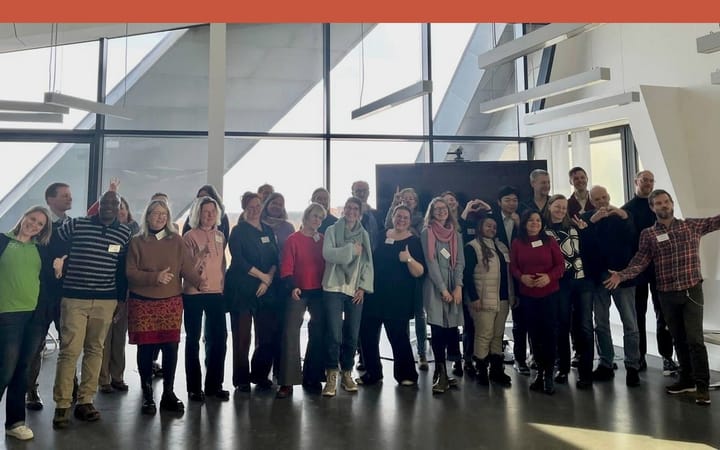
The statement is issued by the six founding institutions of the network: Leuphana University Lüneburg (Germany), York University (Canada), the Earth Charter Center for Education for Sustainable Development and University for Peace (Costa Rica), Heidelberg University of Education (Germany), the University of Crete (Greece) and Rhodes University (South Africa). More about the network is available on the UNITWIN pages.
Read the full statementOur Shared Vision for Education for Sustainable Development (ESD) until and beyond 2030 · October 2026
Our Shared Vision for Education for Sustainable Development (ESD) until and beyond 2030
In light of the upcoming UNESCO World Conference on Education for Sustainable Development (ESD) in Nairobi (Kenya) on January 13–15, 2027, and the Nairobi Consensus expected to be adopted, the UNITWIN Network on Education for Sustainable Development and Social Transformation (UNiESD&ST) calls upon all stakeholders to promote the importance of ESD as stated in Sustainable Development Goal (SDG) 4.7 and defined in the ESD for 2030 Roadmap as empowering learners with knowledge, skills, values, and attitudes to take informed decisions and make responsible actions for environmental integrity, economic viability and a just society, empowering people of all genders, for present and future generations, while respecting cultural diversity. ESD is a vital means of implementation for sustainable development, an integral element of quality education, and a key enabler to achieve all of the SDGs. As its name indicates, the Network understands ESD as a vehicle for societal transformation that safeguards planetary health and promotes social cohesion at a time of growing political divides.
Following UNESCO's vision of a new social contract for education, ESD is understood as a lifelong learning process in formal and non-formal learning environments. With sustainability as an objective and directive, ESD is key to implementation and enables us to cope with today's and future challenges, such as our shared digital future, the health of people and planet, and the weakening of social cohesion and democratic culture.
ESD is an integral part of quality education as aimed for in SDG 4, yet it addresses a broader scope across all aspects of education, public awareness and training, and across all learning dimensions: socio-emotional, cognitive and behavioural. Drawing on transformative, social and transdisciplinary learning, as well as related frameworks on climate, water, energy, food security and social justice, ESD engages children, youth, students and lifelong learners across all levels and settings of education. It brings diverse forms of knowledge and perspectives into dialogue and supports learners in shaping desirable presents and futures in response to interconnected global challenges. As a driver in transforming education, ESD inspires new ways to rethink how assessment can be better used for learning that goes beyond global awareness to develop critical and contextualized understandings of sustainable development and to mobilize informed action. As a cross-cutting concept, it is to be addressed in all forms of curricula and levels of formal education and training, in non-formal settings, and in public awareness raising to engage learners of all ages in deliberating sustainable development, encouraging and enabling the public to move away from unsustainable ways of living. Especially higher education, in teaching, research and community service and in its societal role as a trusted broker of information, is expected to contribute to the SDGs, sustainable development and the common good, with ESD at the core throughout the whole institution.
Therefore, sustainable development must be positioned as a purpose of education while continuously questioned, examined, re-envisioned and contextualized. Connecting ESD to current value systems, ethics and spirituality, as well as power relations, needs to be better understood in enhancing ESD's role in furthering well-substantiated social criticism, confronting global injustices, and challenging the systems and structures that perpetuate and normalize unsustainability. The Earth Charter provides an important ethical framework for ESD that can support implementation. Moving beyond business as usual and the superficial mainstreaming of sustainability requires leadership at several levels at once, through policy, institutional governance, and educators and community leaders acting without formal mandate, and it requires sharing authority with those whose perspectives have so far gone unheard, young people above all.
As the ESD for 2030 framework enters its final years, the Recommendation on Education for Peace, Human Rights and Sustainable Development provides an important standard-setting and long-term reference, including a transformative approach across all levels of education and in other learning settings. ESD is where this ambition is already being put into practice, while the proposed Nairobi Consensus is expected to help shape the next phase of ESD beyond 2030. We invite all education stakeholders to frame all action in the broader vision of ESD as a key enabler for societies to build a more just and sustainable world for all, both within the current SDGs and the broad vision of sustainable development until and beyond 2030.
The PDF version includes the selected references and the list of founding members.