
Goals for Education in Hamburg: ESD beyond 2030 and the value of mistakes
What does education need to contribute to sustainable development beyond 2030? A personal reflection on the panel at the regional conference Goals for Education in Hamburg.
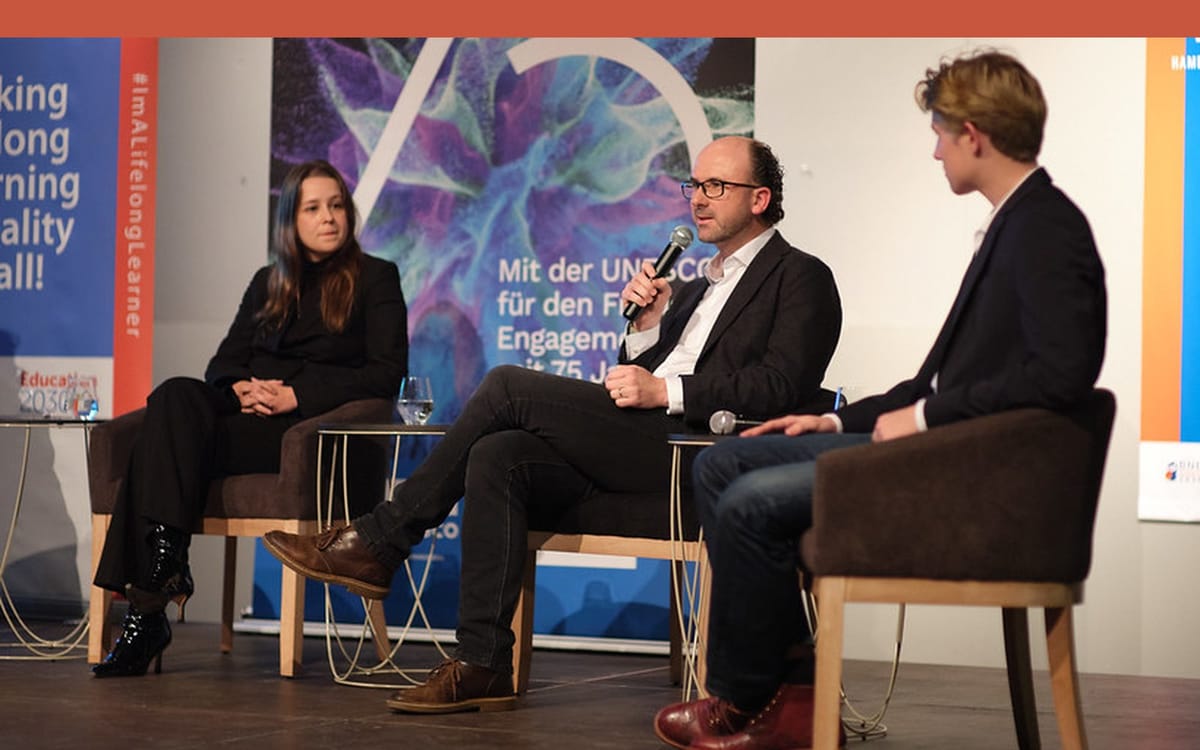
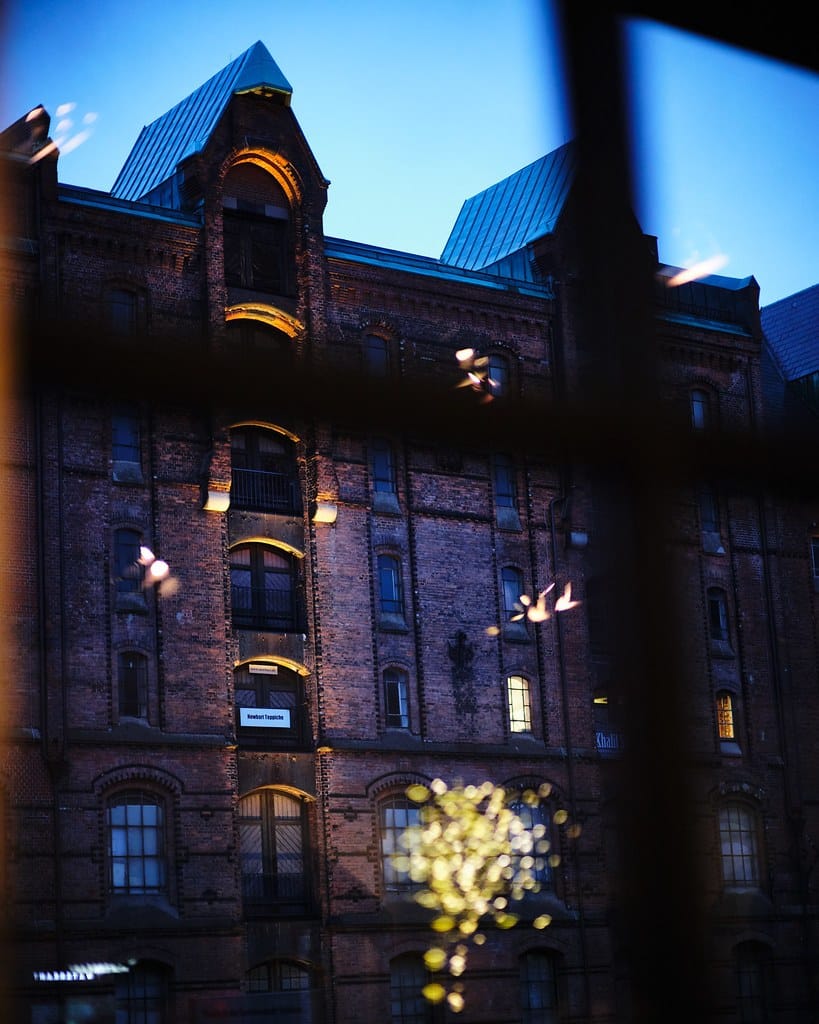
What does education need in order to contribute to sustainable development beyond 2030? This question framed the opening evening of the regional conference Ziele für Bildung (Goals for Education) on 19 November 2026 in the Kesselhaus in Hamburg's Speicherstadt. The German Commission for UNESCO, the UNESCO Institute for Lifelong Learning and the Free and Hanseatic City of Hamburg organised the two-day conference to mark 75 years of the German Commission and of Germany's membership in UNESCO. Daniel Fischer, holder of the UNESCO Chair in Higher Education for Sustainable Development, was invited to the panel discussion.
Many vantage points on one stage
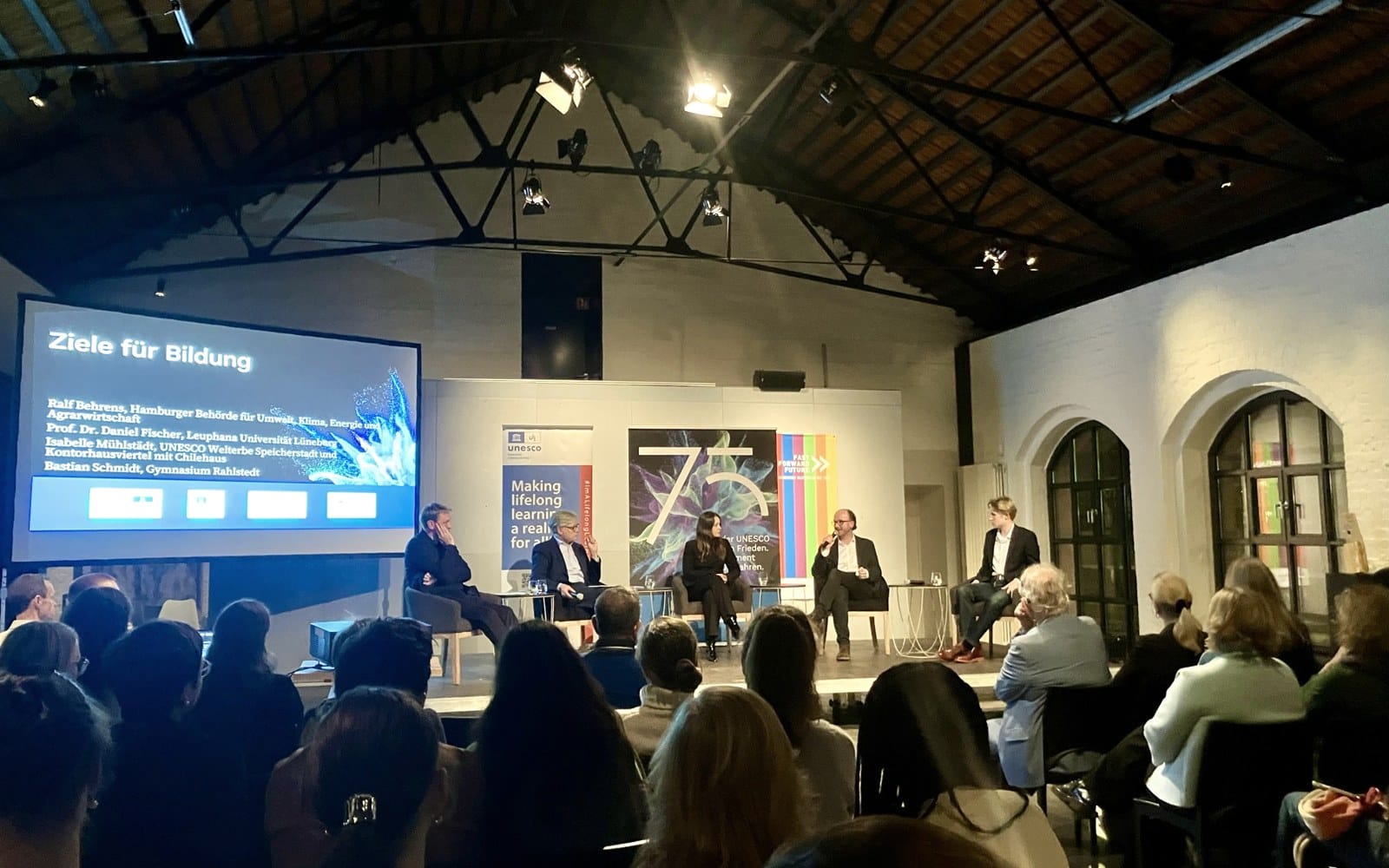
I have rarely sat on a panel that brought together so many different ways of looking at education. Roman Luckscheiter, Secretary-General of the German Commission for UNESCO, moderated a round with people from business, city administration, foreign policy, world heritage, research and school. Two video messages set the scene before we started: learners from around the world describing how they want to learn in 2045, and Qun Chen, UNESCO Assistant Director-General for Education, on education beyond 2030.
On the panel
- Michaela Beck, Hamburg Chamber of Commerce
- Ralf Behrens, Hamburg Ministry for Environment, Climate, Energy and Agriculture (Masterplan ESD 2030)
- Milly Dziallas and Bastian Schmidt, pupils at Gymnasium Rahlstedt
- Daniel Fischer, Leuphana University Lüneburg
- Anke Grotlüschen, Universität Hamburg
- Isabelle Mühlstädt, World Heritage Speicherstadt and Kontorhaus District
- Anke Reiffenstuel, German Federal Foreign Office
Moderation: Roman Luckscheiter, German Commission for UNESCO
Young people on the panel, not only in the audience
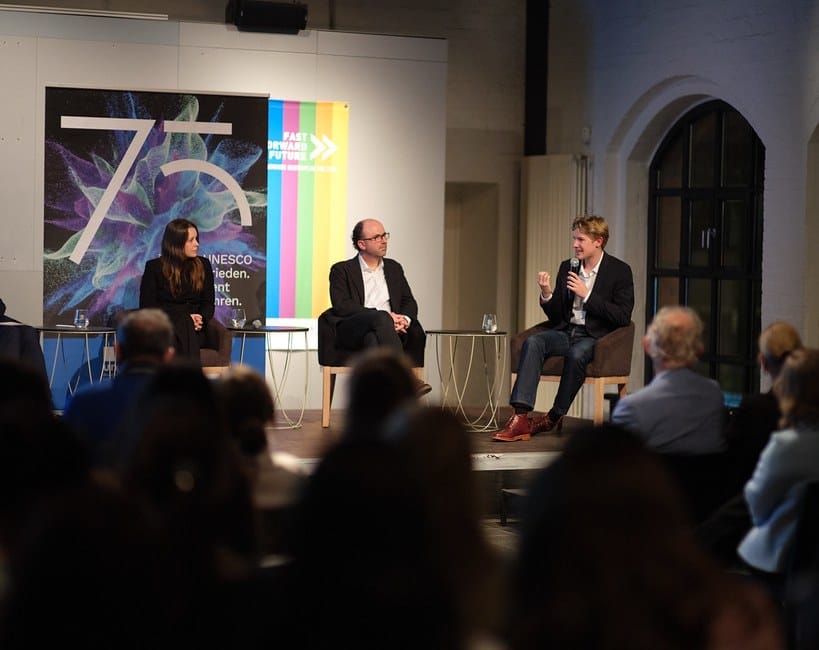
I was particularly impressed by two students who sat on stage as panellists . Milly Dziallas spoke about exam stress and the feeling of having hardly any room to breathe. At the same time, she said, there is the constant question of what all this knowledge and material is actually good for in a world that is changing so quickly. Bastian Schmidt observed that, despite the many initiatives at their school, there are still far too few opportunities across the board for students to really shape things, rather than just being consulted or heard. Both points went straight to what I had wanted to highlight in my statements.
When does ESD make a difference?
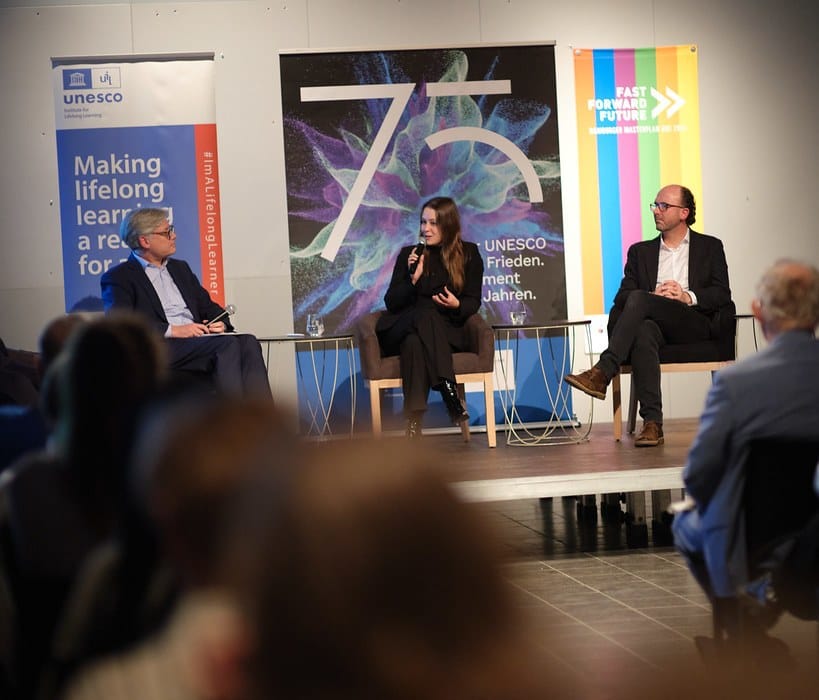
I was asked what we know about when education for sustainable development actually has an effect. I tried to address this question by exploring a counter-question: what kind of effect do we want? For a long time, ESD has looked mainly at individual behaviour, such as switching off the lights, buying fair trade products or eating less meat. That is not wrong. But whether we can live sustainably depends at least as much on the conditions we live under: what the train costs, what the canteen serves, which rules apply. If ESD only addresses the private or personal sphere, we risk shifting responsibility onto individuals, and often onto the youngest. ESD therefore always also has to be political education.
From a growing body of empirical research we know today quite a bit about when ESD "works". It is particularly impactful when young people have the opportunity to experience sustainability at their school instead of only talking about it in class. It helps when they have real opportunities to contribute and participate meaninfully, including the chance to raise uncomfortable questions. Here Bastian's observation reflects recent data: according to the German School Barometer, only about a third of pupils say they have much say over classroom rules. And it takes patience, because the ability to act grows slowly.
Why ESD beyond 2030?
The event also provided an opportunity to look ahead, with the World Conference on ESD in Nairobi, Kenya, in January 2027 approaching. The panel made clear that 2030 is a stepping stone and a date in a programme, not a deadline for the problems. Our democracies are under pressure, and sustainability is often an area of conflicting goals and societal contestation. ESD offers a place where people can learn to argue about such questions and explore common ground in values. I also argue that we should take sustainability out of the corner of sacrifice. At its core, it is about how we can all live well with each other and nature. That needs ideas and an education that makes people want to engage with the future. Finally, this education has to reach everyone, not only those who are already privileged.
Mistakes as part of the performance
The evening closed with music. Iva Andrejic, a student at Gymnasium Rahlstedt, played the guitar. Her performance was wonderful. What impressed me even more was how she reflected on it afterwards. In music, she said, mistakes are something positive. It never becomes perfect, and that is not even the point. In her view, the performance is a moment to honour what one has learned.
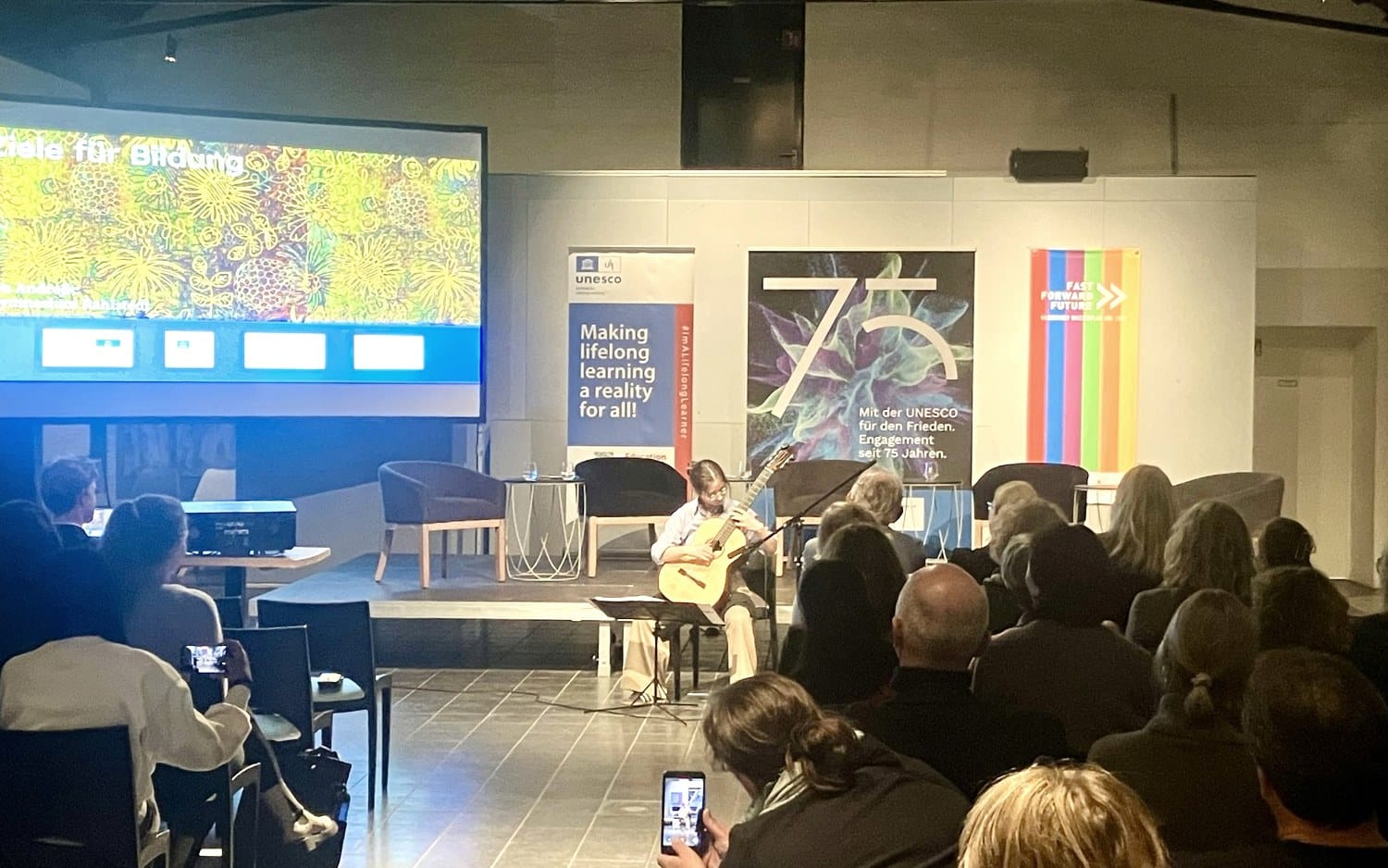
I took that thought home with me. If we want an education that makes people curious about the future, we need spaces where trying things out and getting them wrong belong to learning, and where showing what one has learned can feel more like Iva's performance than like an exam.
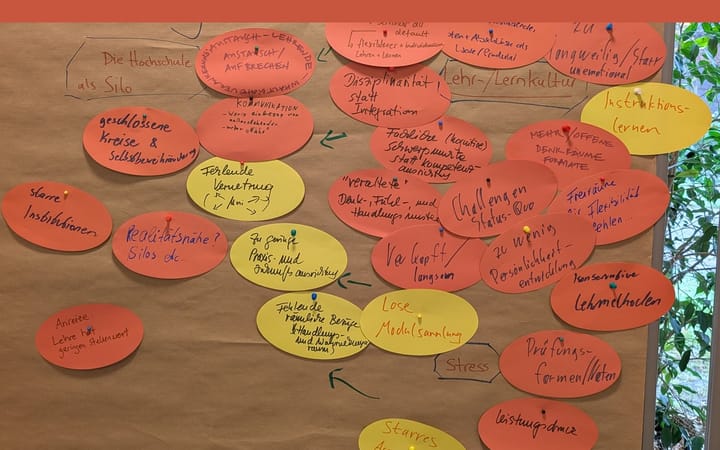
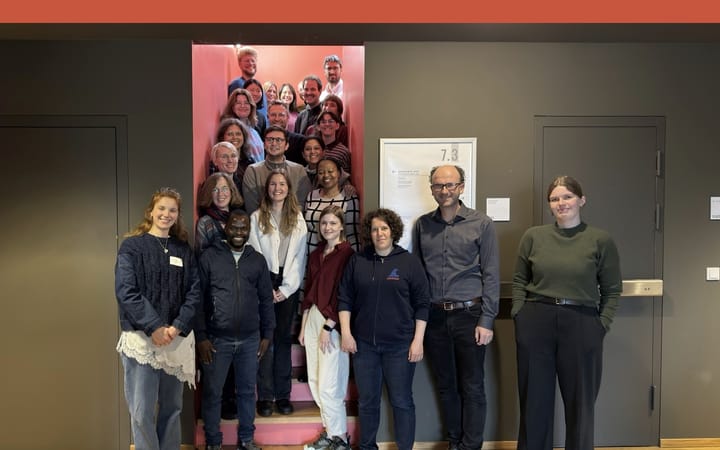
The next morning, the same theme came up again in our future workshop on higher education. Read the second part of this reflection.
Photos: UNESCO Institute for Lifelong Learning (Flickr album of the conference) and Harald Hantke.