
Rethinking Higher Education: UNESCO's New Recommendation

How can a recommendation first adopted by UNESCO in 1974 guide education at a time of climate change and armed conflict? On 7 February 2024, the Rethinking Higher Education Dialogue Series brought together an online panel to discuss UNESCO's new Recommendation on Education for Peace and Human Rights, International Understanding, Cooperation, Fundamental Freedoms, Global Citizenship and Sustainable Development, which replaces the 1974 Recommendation.
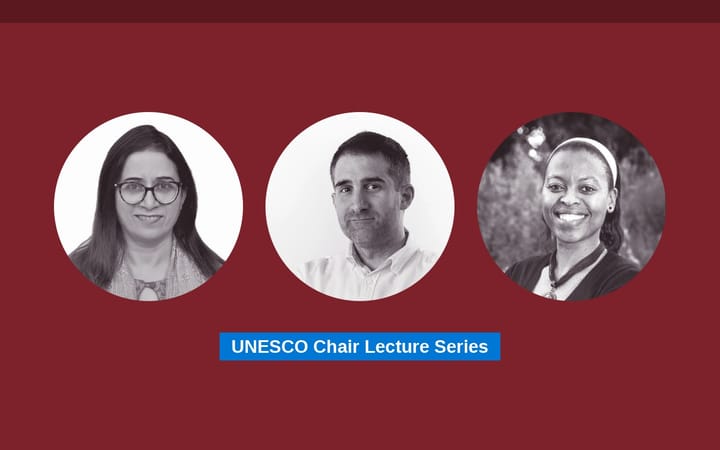
Lutz Möller opened the dialogue with the history of the revision and explained why the Recommendation matters for current challenges such as climate change and conflict. Heila Lotz-Sisitka pointed to the stronger emphasis the new text places on the role of education in shaping the future. Mirian Vilela stressed that state and non-state actors need to work together if the Recommendation is to take effect. The discussion also turned to the legal status of the document and to how it can prompt action at national and international level. In his closing remarks, Daniel Fischer highlighted how law can shape education and encouraged participants to work with the Recommendation in their own contexts.
Speakers:
Mirian Vilela, Executive Director of the Earth Charter International Secretariat and the Center for Education for Sustainable Development at UPEACE, Costa Rica
Heila Lotz-Sisitka, SARChI Chair in Global Change and Social Learning Systems and Professor in Education, Environmental Learning Research Centre, Rhodes University, South Africa
Lutz Möller, Deputy Secretary-General and Head of the Policy Department, German Commission for UNESCO
Moderation: Daniel Fischer, Leuphana University Lüneburg
This dialogue was part of the Rethinking Higher Education Dialogue Series of the UNESCO Chair in Higher Education for Sustainable Development at Leuphana University Lüneburg, organised within the UNITWIN cooperation programme on Education for Sustainable Development and Social Transformations.