
“Universities Must Remain Places for Dialogue”: Interview on the UNESCO Chairs Conference 2024
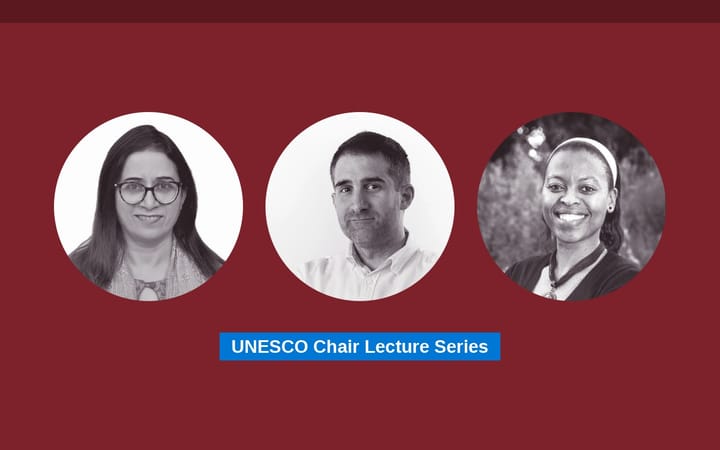
In the yearbook of the German Commission for UNESCO (in German), Daniel Fischer and Deepika Joon look back on the UNESCO Chairs conference hosted in Lüneburg in 2024.

What can universities contribute to the 2030 Agenda at a time when progress is too slow? In the 2024 yearbook of the German Commission for UNESCO, Der Kreativität Räume geben, Daniel Fischer and Deepika Joon talk about the international conference of the network of UNESCO Chairs in Germany, which our Chair hosted at Leuphana University Lüneburg from 7 to 9 October 2024. The interview is in German.

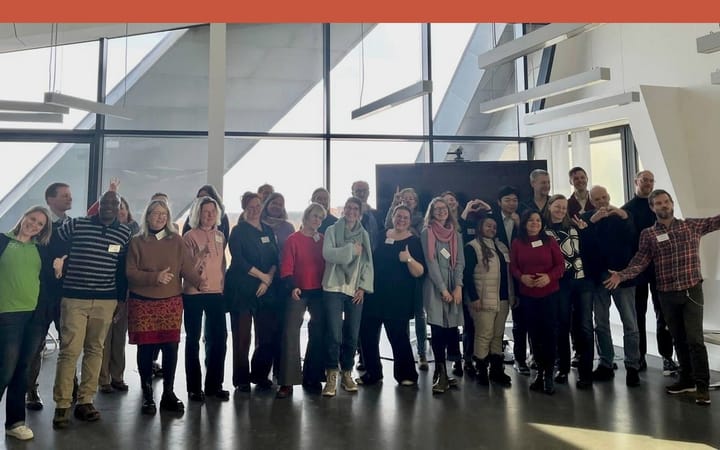
Participants from more than ten countries discussed how education can contribute to sustainability, how higher education needs to be designed for this, and what role young academics play in the transition to sustainability. With the 2030 Agenda just past its halfway point, the conference asked the German UNESCO Chairs how they assess progress towards the Sustainable Development Goals, where their own research contributes, and how universities and university teaching need to change so that they do not only treat the SDGs as a topic but contribute to them through transformative education. A particular concern was to bring the perspectives of learners into the conference more strongly than at earlier meetings.
Looking back, the interview reports a broad consensus that progress towards the goals is too slow. Participants also pointed out that focusing the SDGs on measurable targets and indicators carries risks, and that public debate is narrowly focused on climate. For the network of UNESCO Chairs, the conclusion was to expose people more to the complexity of sustainability and to make them aware of what cannot be measured directly. Another result of the conference is to involve young people and students more closely in the work of the UNESCO Chairs.
On the role of universities, the interview stresses that most future decision-makers spend formative years at university. University teachers therefore have to be clear about which world, and which roles in it, they prepare young people for through their choice of aims, content and methods. This does not interfere with the freedom of research and teaching, but shows that there is no uninvolved position. In view of the current political situation, universities must remain places for dialogue, searching, questioning and negotiation (our translation).
Reference:
Fischer, D., & Joon, D. (2025). "Hochschulen müssen Orte für den Dialog, die Suche, das Hinterfragen und Aushandeln bleiben": Interview zur Internationalen Tagung des Netzwerkes der Deutschen UNESCO Chairs 2024. In Jahrbuch 2024: Der Kreativität Räume geben (pp. 53–54): Deutsche UNESCO-Kommission.