
Vocational Education for Sustainable Development: A Whole School Approach Guide
A practical guide (in German) for vocational schools that want to become places of sustainability, from school development in the Whole School Approach to lesson design. By Jorrit Holst and Harald Hantke for Greenpeace's Schools for Earth.
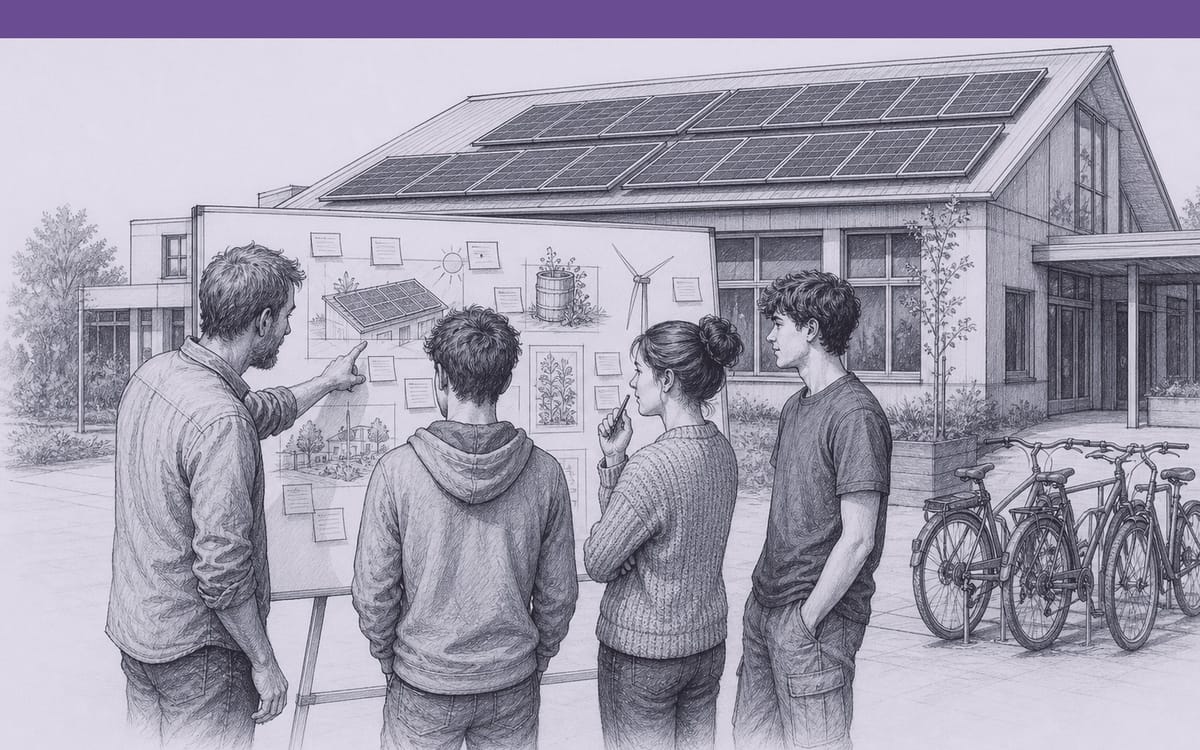
How can vocational schools become places where sustainability is lived as well as taught? This guide, written by Jorrit Holst and Harald Hantke for Greenpeace's school programme Schools for Earth, supports teachers and school leaders at vocational schools in taking up vocational education for sustainable development (Berufliche Bildung für nachhaltige Entwicklung, BBNE) in a whole-school approach.
The first part accompanies school development step by step: getting started, forming a sustainability team, taking stock with a self-check, developing a vision of the school of the future, moving into action through backcasting and action planning, implementing, celebrating and evaluating. The second part turns to curriculum and teaching, with a didactics of BBNE and guiding questions for putting it into practice. Templates for copying and examples from vocational schools across Germany complement the guide. The current edition adds the links between BBNE and democracy learning and applications in further vocational fields.
The guide is in German.
Berufliche Bildung für nachhaltige Entwicklung. Whole School Approach und Unterrichtsgestaltung an berufsbildenden Schulen
Citation: Holst, J., & Hantke, H. (2025). Berufliche Bildung für nachhaltige Entwicklung. Whole School Approach und Unterrichtsgestaltung an berufsbildenden Schulen. In Greenpeace e.V. (Hrsg.), Schools for Earth – Das Greenpeace Schulprojekt. doi.org/10.60813/5KTZ-Z176